Books
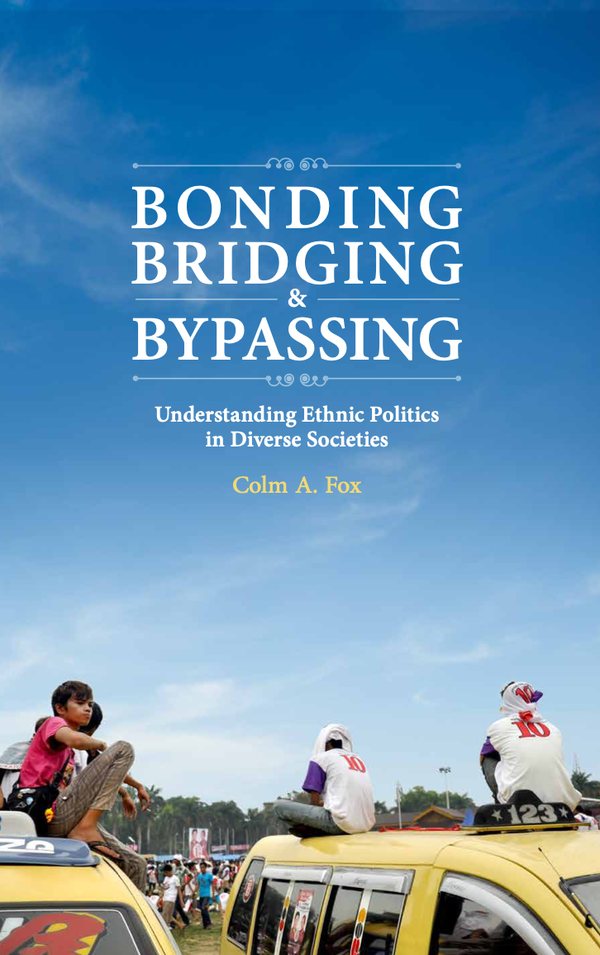
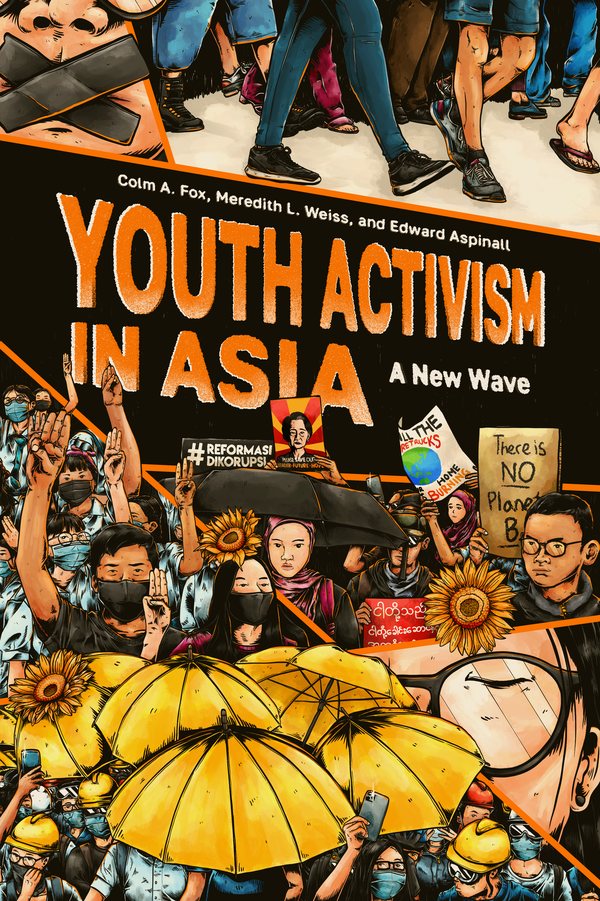
In Bonding, Bridging, & Bypassing I ask why election candidates appeal to ethnic groups, drawing on tens of thousands of campaign posters I photographed in Indonesia. Youth Activism in Asia, which I co-edited, is an open-access volume on the new wave of youth activism across the region.
Monograph
Bonding, Bridging, & Bypassing
Winner of the 2025 Best Book Award, APSA Race, Ethnicity and Politics Section.
Shortlisted for the 2026 EuroSEAS Social Science Book Prize.
Societal divisions and even violence can occur when electoral candidates appeal to race, religion, or tribe. Why do candidates make these ethnic appeals? More specifically, why do some candidates appeal to their own ethnic group while others reach out to other ethnic groups or abandon ethnic appeals altogether?
To answer this question, I study the campaign appeals made by thousands of candidates, drawing on photographs of over 25,000 election posters from campaigns across Indonesia, along with newspaper reports and interviews.
I show how electoral rules, political party ideology, ethnic demographics, and social norms shape candidates’ decisions to bond with co-ethnics, bridge across other ethnic groups, or bypass ethnicity entirely. The findings show which ethnic identities are likely to become politicized, and suggest ways to curb divisive ethnic politics.
Supplementary materials and data
Here you can find the online supplementary materials, the two codebooks, and the data and code to reproduce every table and figure in the book.
Praise
Edward Aspinall, Australian National University
“Bonding, Bridging, & Bypassing is at once a decisive contribution to theorizing on ethnic politics, and a landmark analysis of how ethnic politics works in one of the world’s multi-ethnic giants, Indonesia. Drawing on a stunning array of sources, it provides us with new ways to study ethnic politics, and a new toolbox for understanding how, why, and when politicians draw on ethnic appeals to win elections.”
Jamie Davidson, National University of Singapore
“Colm Fox adopts a fresh approach to the study of ethnic politics. Rather than fixate on violence or on the rabble-rousing of national leaders, he focuses on the multitude of politicians below the national level, convincingly showing how electoral rules, and not prejudice or megalomania, can determine whether candidates make ethnic appeals, what kinds they make, or—shockingly to some—why they might bypass ethnic appeals altogether. While the preponderance of evidence draws from meticulous research conducted in the important, multi-ethnic country of Indonesia, this innovative book’s findings will apply widely.”
Allen Hicken, University of Michigan
“Bonding, Bridging, & Bypassing tackles one of the core questions in comparative politics—what are the consequences of ethnic diversity for democratic politics—from the perspective of a candidate for office. Combining wholly original data, the book provides a convincing account of how electoral rules, group size, and party characteristics shape candidates’ decisions on whether to appeal to their own ethnic group (bonding) or mobilize across groups (bridging). The book should be on the shelf of any comparativist interested in ethnic politics, political institutions, or comparative electoral politics.”
R. William Liddle, Ohio State University
“A major breakthrough in the scientific understanding of ethnic politics in emerging democracies. The secret sauce is the focus on candidates’ appeals to the voters during election campaigns and the systematic and replicable use of data photographed from thousands of posters combined with local newspaper reports and hundreds of rich interviews. The result is a brilliant analysis of Indonesia today that will inform future research in many other countries.”
Tom Pepinsky, Cornell University
“Ethnic politics in Indonesia defies easy classification. Based on immersive field research and an impressive range of original data, Bonding, Bridging, & Bypassing brings clarity to the logic of ethnic politics in one of the world’s most diverse democracies. Rather than treating ethnic appeals as inevitable, Colm Fox shows how institutional rules and ethnic demography interact, explaining why, when, and how politicians use ethnic appeals. The result is a novel, compelling, and comprehensive account of the politics of identity, with implications for ethnic politics in diverse democracies around the world.”
Contents
- 1. Introduction
- Part I. Theory
- 2. What is an ethnic appeal?
- 3. The logic of ethnic appeals
- Part II. Data
- 4. Electoral reform in Indonesia
- 5. Measuring ethnic appeals
- Part III. Evidence
- 6. Electoral rules
- 7. Viable ethnic groups
- 8. Party ideology
- Part IV. Implications
- 9. Religious polarization in Indonesia
- 10. Conclusion
- Appendices
- A. Statistical analysis
- B. Newspaper data
- C. Election poster data
Edited volume
Youth Activism in Asia
Over the last decade, a youth revolt has swept through Asia. Massive, regime-rocking protests have grabbed global attention as students and other young people have confronted security forces on the streets, taking great risks to condemn authoritarian rule, promote democracy, and to push forward new agendas of personal freedom and gender equality. Behind the scenes, young people have experimented with novel and diverse modes of political and social activism, often using new tools of online communication and cultural expression, forging new kinds of coalitions, and exploring nonconfrontational and subterranean networking.
In Youth Activism in Asia we look equally at episodes of spectacular protest and at less visible forms of engagement, examining the diversity, origins, and impact of contemporary youth activism in Asia. Across fifteen case studies, we trace shared patterns in demands, tactical repertoires, and activist networks, and examine what differentiates protest movements across countries and over time. Drawing on original fieldwork and, in many cases, their own experience, the authors cover Brunei, China, Hong Kong, Indonesia, Malaysia, Myanmar, the Philippines, Singapore, Taiwan, Thailand, Timor-Leste, and transnational activism.
We see “activism” broadly, as any action intended to bring about social and political change. The volume contributes to our understanding of the relationship between protest and democratic backsliding, of engagement with new communication technologies, and of this generation’s distinctive intersectional politics, and it showcases the creativity, energy, boldness, and diversity of a new generation of Asian political activists.
Praise
“This timely and original book will resonate with scholars and practitioners alike, offering a nuanced understanding of the evolving dynamics of social and political change in the rapidly shifting regional and global landscapes. I have not encountered another work in the literature that provides such a thorough and comprehensive account of this wave of activism.”
Contents
- Introduction
- A New Wave of Youth Activism in Asia Edward Aspinall, Meredith L. Weiss, and Colm A. Fox
- Part I. Revival
- 1. Revolution of Our Generation: How Hong Kong Youth Achieved Generational Change by Decentralizing the Democracy Movement Shue Fung Chow
- 2. Resisting Democratic Decline: The Return of the Indonesian Student Movement in 2019–2020 Fauziah Mayangsari
- 3. Thailand’s Youth Movement and Its Political Consequences Akanit Horatanakun
- 4. Students and Revolution in Myanmar: New Shifts in Discourses of Interethnic Unity? Pan Hsu Pyae Eain and Tamas Wells
- 5. Where Have All the Flowers Gone? The Life Trajectories of Participants in Taiwan’s Sunflower Movement Ming-sho Ho and Chun-Ching Tu
- Part II. Innovation
- 6. Tracing the Milk Tea Alliance: Transnational Solidarity and Youth Activism in Asia Wichuta Teeratanabodee
- 7. Rerooting and Rerouting: Youth Activism in Post-COVID Philippines Yatun Sastramidjaja, Sarah Faith Rulloda, and Giselle Manuel
- 8. Indonesia’s Young Antifeminists? Capturing the Socially Conservative Faction Within Student Movements Dyah Ayu Kartika
- 9. Research as Praxis: Research-Based Activism by Youth Environmentalists in Technocratic Singapore Bertrand Seah
- 10. These Are Everyone’s Streets: Student Protest at the National University of Timor Lorosa’e Berta Antonieta Tilman Pereira and David Webster
- Part III. Adaptation
- 11. Double Activism, Double Burden: A Case among Malay-Muslim Activists in Malaysia Nur Adilla
- 12. Quiet Activism Under an Absolutist State: The Politics of Youth Activism and Advocacy in Contemporary Brunei Mu’izz Abdul Khalid
- 13. Returning to the Norm? The Reemergence of Student Activism in Singapore Joel Yew and Daryl W. J. Yang
- 14. From the Left and Beyond: Continuities and Discontinuities in Student Activism in the Philippines Juhn Chris P. Espia
- 15. Youth Activism in Reform-Era China, Old and New Teresa Wright